Friday, August 15, 2008

Skelton Again

Once again, much has been made about James Skelton's 165-pound frame. I wanted to take a look at this from a physics perspective. Let's take a quick look at the physics of a crouching catcher. Below is the ugliest free body diagram you will ever see, but it is of a crouching catcher from his knees up. It is a very simple model, but one that should show the relationship between the catcher's weight, height, and knee reactions.
Acting downward is the weight (W) of everything from his knees up, including equipment. This acts at the center of mass of everything, I've got this acting roughly at the anterior side of the top of the torso. It should be further to the right, but Microsoft Word made it difficult to put things in the right place. We'll say this value is 85% of the player's weight plus 15 pounds of padding. For Skelton, this is 155.3 pounds. For a player like Dusty Ryan (6'4", 220), this will be 202.o pounds.
The reaction force at the knee (R) is the compressive support provided by bone contact. This is typically the force that will be acting on the meniscus of the knee, which essentially internal padding within the knee joint.
The Quadriceps (Q) are acting in tension to create a moment balance for the body. If not for the quadriceps, the knee reaction and weight would cause the body to move counterclockwise. Note that if the center of mass is to the right of the knee, the hamstrings would provide the rotational support. The force of the quadriceps acts through the patellar tendon.
The distance from the center of mass to the knee (a) is going to be a function of the catcher's height and his crouching mechanics. The taller a catcher or the less his torso bends, the higher the value a will be. For now, we will assume this to be 1/10 of the player's height. For Skelton, 7.1 inches, while Ryan's value will be 7.6 inches.
The distance (b) is the distance from the center of the knee to the patellar tendon. The mechanics of the knee allow this distance to increase when needed. While this value varies significantly, we'll say it is 2 inches.

By doing a force/moment balance, you can find that R will be equal to W*(a+b)/b, and Q is equal to W*a/b.

For James Skelton, the force at his meniscus is 714.38 pounds. For Dusty Ryan, the force at his meniscus is 969.6 pounds. As far as the quadriceps, James Skelton's quads will need to impart 559.6 pounds of force; Dusty Ryan's quads will need 767.6 pounds.

While there is going to significant error in these calculations, the simple fact is that heavier and taller catchers will put more stress on their knee while crouching. This has already been shown in Dusty Ryan's case, as he missed much of last season with a torn meniscus.

The scouts are wrong about James Skelton. His lack of bulk does not portend durability problems. The people who see him as skinny are confusing the confusing bulk with strength. It is entirely possible that Skelton's leg strength could prevent him from being durable, but let's keep strength and bulk separate, because they are.

Thursday, August 14, 2008

Regarding James Skelton


Out of curiosity, I went diving through my one box of baseball cards that isn't stashed away in storage to check on the weights of some catchers in their early years. One of the knocks on James Skelton that I have always felt was unfair was that he will never be able to play catcher in the Major Leagues because he is too skinny, at 5'11"-165 pounds.

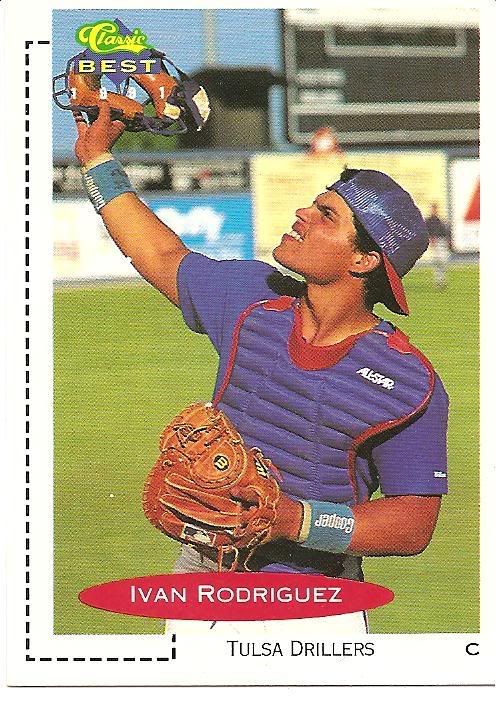
Well, in 1992, Ivan Rodriguez (2152 career games caught) was listed at 5'9"-165. (The card shown is from 1991... My scanner is also in storage, so I image searched some Pudge rookie cards)


In 1994, Jason Kendall (1734 games caught) was listed at 6'0"-170.


James Skelton may have problems hitting for power, and he may have durability concerns (although I feel confirmation bias plays a large role in those reports), but I don't think it is fair to say he is too skinny to be a major league catcher.

Beltran and Zumaya

Obviously the big news yesterday was Joel Zumaya going onto the disabled list and Francis Beltran being called up to take his place. On the surface, Beltran was an odd choice. With all the love Casey Fien has been getting in Toledo, he would have seemingly been the top choice. Once you factor in the fact that Todd Jones is returning Friday and someone would need to go, it makes sense to go with Francis Beltran. But what if he was the more deserving pitcher?

Beltran has not allowed a run since July 6. In that time, he has walked 2, struck out 15, and allowed just three hits in 9.1 scoreless innings. Beltran has been quietly dominant since Toledo's all star break. During the bullpen series, I have brought up the strategy in buying low on relievers recovering from injuries. Beltran fits this description, as last year was his first full season of pitching since 2005 Tommy John surgery. I would not be opposed to Beltran staying in the bullpen for the duration of the season to see if he is worth keeping around. If you are worried about the roster crunch when Todd Jones returns, I would suggest that Freddy Dolsi can be sacraficed for a couple of weeks.

And now that gets us to Zumaya. Luckily, I haven't been able to watch or listen to the games this week, saving me from sitting through his dreadful outing on Tuesday. But the question I have: WHY WAS HE EVEN PITCHING? The guy is coming off of shoulder surgery, had lingering shoulder problems over the past few weeks, and hadn't been pitching particularly well. You would think that would have set off some red flags. Once again, something appears to be broken when it comes to the Tigers' handling of injuries. I don't know if the blame falls at Jim Leyland's feet, if Dave Dombrowski is to blame, if Kevin Rand is at fault, or if the team doctors have continually screwed up, but there is a long list of Tigers's players dating back to last summer who have played through minor injuries only to have more severe problems result. As much as everybody wants to fix the bullpen and the pitching staff, I think an overhaul in the team's handling of injuries could go a long way in improving the team.

Wednesday, August 13, 2008

How to Fix a Bullpen, Part 6

Following the pattern, we'll now take a look at different ways to replicate the 2006 Twins model for a bullpen. Aside from Eyre, there were a ton of common threads between the players. Most had very good peripherals coming into the season, which made them less dependent on their defense. Nathan and Rincon were starters before moving to the pen. The same is true of Guerrier, who was a AAA starter before being claimed off waivers. Just as we spent much of the post-Indians post on finding the next Bobby Howry, how about the next Joe Nathan? Specifically, are there any players in their first year of relieving putting up very good strikeout and walk numbers? These would be players who are currently not in the closers role for their team, as they could still come at a discount. Also, because the Twins were able to take advantage of the Giants panicking, I'll list any 2009 weaknesses for the teams these guys are playing for.

J.P. Howell, 25, Tampa Bay
I don't think Howell would be available, as he has gotten some high leverage innings. Throw in the fact that he's cheap, and that the Rays seem to be run by bright people, Howell would probably cost a pretty penny. The Rays really don't have any weaknesses for next year's team. Any holes they have can be filled internally. This team will be on top for a while, folks.

Edwar Ramirez, 27, New York Yankees
Okay, not a starter before this year, but his strikeout and walk numbers are out of this world. For 2009, the Yankees could use a catcher, firstbaseman, centerfielder, or starting pitcher. I would have rather gotten Ramirez for Rodriguez. Unfortunately, the Tigers don't appear to be capable of looking past velocity, a flaw that may be the root cause of these bullpen problems

Robinson Tejeda, 26, Kansas City
It's easy to put up horrible numbers with the Rangers. Since joining Kansas City's bullpen, Tejeda has been pretty solid with 24 K's, 8 BB in 22 innings. The Royals have a potential hole at 2B, 1B, and could use another starting pitcher or two.

Jose Arredondo, 24, Los Angeles Angels
K-Rod's heir apparent. Can't be had.

Chad Durbin, 30, Philadelphia
We've been down this path, and probably won't go back down it.

Doug Waechter, 27, Florida
Always low on both strikeouts and walks, Waechter needed a good defense behind him as a starter. Now as a reliever, the K rate is more respectable and could be a sleeper next year. That said, he was placed on the disabled list with shoulder problems today. The Marlins will want cheap players. Their needs will be dependant on where they decide to cut costs. Frankly, Jeremy Hermida is my target on the Marlins' roster.

Buddy Carlyle, 30, Atlanta
A journeyman who moved to the bullpen this year, Carlyle now has 40 K's in 39 innings, but the walks (16) are a bit high for my taste. He's probably a bit old to be the next Nathan, but could be worth a shot as a sleeper. The Braves could use help in left field and in the rotation.

Joel Hanrahan, 26, Washington
A starter until this year and a top Dodgers prospect in the early part of this decade, Hanrahan has 75 K's in 65 innings this year, enough to earn some Nathan comparisons. He has been closing since the trade of Jon Rauch, and could stay in that role in the future. In short, I'm doubting he can be had at a discount. The Nats seem to be young and injured all over the place, and their specific needs will be a function of injury recoveries.

Hong-Chih Kuo, 27, Los Angeles Dodgers
In his first full season in relief, Kuo has finally stayed healthy. The lefty has been a huge cog in the Dodgers bullpen that I almost wrote about the other day. In 66.7 IP, he's only walked 15 guys while striking out a whopping 78 with only two players taking him out of the park. No wonder he's had a 1.76 ERA so far. I doubt he can be had as a throw in, and the Dodgers may be due for another overpaid outfielder in a few months. Sheffield for Kuo and Kershaw, here we go.

Taylor Buchholz, 26, Colorado Rockies
Struggled for years as a back of the rotation guy, Buchholz has come into his own as a reliever the past two years with the Rockies. Like the other guys, the K's are up and the BB's are down. The Rockies' most glaring hole appears to be at second base.

There are some guys who fit the Joe Nathan 2003 mold. A struggling starting pitcher having a breakout season in reliever with lots of strikeouts and few walks. What about Tigers who fit the A.J. Pierzynski mold? That is, who are some players due for a decline with a hot prospect right on their tail?

?

Oh well. No studs banging down the door, and a lot of the players due for decline have already done so.

The Twins also did a lot of promoting from within. Who are some players in the Tigers' minor league system with low walk rates and high strikeout rates within range of the Big Leagues (Lakeland and above)?

Casey Fien
Chris Lambert
Guillermo Moscoso
Robert Weinhardt

Without going into individual profiles on those guys, they all are striking out a lot of players, walking few, and generally keeping home runs off the board. If you want to look within the systems for possibilities in next year's bullpen, look at those four guys.

As far as this year's draft is concerned, I'm not convinced we will see dramatic results from the guys taken this year. I know Weinhardt is listed above, but it may take until 2010-11 to see a massive influx of players taken this year in the bullpen. Note how the two Twins relievers in 2006 were taken in the 2002 draft, a four year's difference. It took Crain two years and Neshek four.

One more thing to note about the two bullpens covered so far: they weren't built in a day. The 2005 Indians were mostly accumulated before the 2004 season. All of the players in the Twins' bullpen, sans Dennys Reyes, were in the system more than two years prior to the start of the 2006 season. As we look at more bullpens, we'll find out if a quick fix is possible.

Tuesday, August 12, 2008

Garcia Signs, Sheffield on Waivers, etc.

Freddy Garcia has signed with the Tigers to a minor league deal. This has been long rumored, and appears to be risk free. A minor league deal, the only risk comes if Garcia gets playing time he doesn't deserve. This goes right in line with getting guys on the rebound, meaning this deal may pay off next season if he recovers fully at that point. My crazy idea would be to break him in down in the bullpen until his endurance is built up.

ESPNews says Gary Sheffield was placed on waivers. Big deal. Everybody is placed on waivers in August.

Bonine Out

For those curious about pitching depth, Eddie Bonine was removed from his last start with a shoulder strain. This is the type of thing that could be very serious, and I have a hard time seeing him back with the team this year.

In a related move, it looks like Dontrelle Willis will be taking his rotation spot in Toledo. After some encouragingly low walk numbers in his last few starts with the Flying Tigers, Willis is certainly one worth watching, as he could be the Tigers' ace in the hole.

Monday, August 11, 2008

Sheffield to Tampa?

ESPNews and DRaysBay are reporting Gary Sheffield might be headed to Tampa Bay. Could this mean Tampa Bay claimed him off waivers? If so, would the Tigers let them claim him for nothing? Would the Tigers want a player in return? Would the Rays want the Tigers to pick up some of his salary? Given that, if claimed, the Tigers could dump him off on the Rays and stick them with the salary. The Tigers have some bargaining power here when it comes to players.

This could all be moot if he wasn't claimed though.

Update: Sheffield is in the lineup tonight, so the rumors are still just that: rumors.

How to Fix a Bullpen, Part 5

Last time I said we would cover the 2008 Dodgers bullpen. After looking it over, i want to throw out 2008 bullpens for the time being. Since the season hasn't ended, and bullpens haven't gone through the dog days of August, it looked like 2008 bullpens were favored in the analysis. Instead, we'll go to the third best bullpen: the 2006 Minnesota Twins.

The analysis of the opening day roster to evaluate strategy may be flawed when dealing with the Twins of recent years. This is a team who has made a habit of wasting roster spots on worthless veterans early on, only to surge behind a younger core later in the season. In short, the opening day roster for the Twins looks very different than it does later on in the season. Let's look at the opening day bullpen for the 2006 version of the Twins.

Joe Nathan, 31, RHP
Salary: $3,750,000
Options?: No
2005 Statistics: 70 IP, 2.70 ERA, 22 BB, 94 K, 5 HR
Signed: Acquired from San Francisco with Francisco Liriano and Boof Bonser for A.J. Pierzynski, November 14, 2003

For as overrated as the closer role has become, the value of a dominant shut down closer cannot be overstated. Having a guy like Nathan in the back end of the pen for several years is one of the keys to long term bullpen success. How were they able to get him in this deal? People often forget about Joe Nathan's time with the Giants. Joining the rotation in his first season, Nathan was purely average in 1999 at age 24. He came back the next season, putting up mediocre numbers in the back of San Francisco's rotation amidst shoulder problems. After the 2000 season, Nathan had shoulder surgery followed by weak minor league seasons in 2001 and 2002. Out of options in 2003, he finally moved to relief and put up a promising season for the Giants striking out 83 with a 2.96 ERA in 79 innings. Why the Giants were willing to package him with two prospects in a panic move after the season still makes no sense.

In summary, the Twins were able to acquire Nathan as part of a package in a trade with a dimwitted general manager. They were also able to use the emergence of Joe Mauer to sell high on A.J. Pierzynski before he got expensive. Finally, they noticed the breakout season Joe Nathan had in his first year as a relief pitcher. The peripherals of his 2003 season, healed shoulder, and new role all suggest that Nathan was for real.

Juan Rincon, 27, RHP
Salary: $900,000
Options: No
2005 Statistics: 77 IP, 2.45 ERA, 30 BB, 84 K, 2 HR
Signed: Undrafted Free Agent, 1996

Rincon is another player with very good numbers the year before. He had two primary question marks coming into the season: minor elbow surgery after the 2005 season may have caused problems, and a steroid suspension in 2005 may suggest that he may not have been able to keep up his previous success. Like Nathan, Rincon was a starter in the minors before being moved to the pen upon his promotion to the Major Leagues.

Jesse Crain, 24, RHP
Salary: $361,000
Options: Yes
2005 Statistics: 79.2 IP, 2.71 ERA, 29 BB, 25 K, 6 HR
Signed: 2002 Draft, 2nd Round

Crain was a taken as a reliever in the second round of the 2002 draft and moved quickly to the big league club, cracking the bullpen for good midway through the 2004 season. The K rate was a worry heading into the 2006 season, but he ended up amending that kink in his armor. That Crain would eventually end up with shoulder problems suggest that it might be in a team's best interest to get productive years out of young pitchers while they can. While the Tigers have been aggressive in promoting top starting pitchers, relievers have often lagged behind and rotted in Erie and Toledo.

Francisco Liriano, 22, LHP
Salary: $327,000
Options: Yes
2005 Statistics: 23.2 IP, 5.70 ERA, 7 BB, 33 K, 4 HR (AAA: 91 IP, 1.78 ERA, 24 BB, 112 K, 4 HR, AA: 76.2 IP, 3.64 ERA, 26 BB, 92 K, 6 HR)
Signed: Acquired from San Francisco with Boof Bonser and Joe Nathan for A.J. Pierzynski, November 14, 2003

Yes, Liriano started the year in the bullpen while the putzed around with Kyle Lohse. The good news is that Liriano's innings were kept down; the bad news is that it still didn't do a lick of good for them. This shows that the bullpen can be a nice place to get quality innings out of a developing starting pitcher while building him up for a rotation role down the line.

Matt Guerrier, 27, RHP
Salary: $343,500
Options: No
2005 Statistics: 71.7 IP, 3.39 ERA, 24 BB, 46 K, 6 HR
Signed: Claimed off waivers from Pittsburgh, November 20, 2003

The mop up guy for much of his early time in Minnesota, the Twins were once again able to get a former top prospect on the cheap from an inept general manager. Guerrier had been coming off an injury plagued (shoulder tendinitis) season in 2003, where he still kept his walks to a minimum in AAA. The Pirates foolishly tried to slip him through waivers. Duaner Sanchez was also lost on waivers to the Dodgers the same day, and this is the year where they lost five players in the Rule 5 draft.

Willie Eyre, 27, RHP
Salary: $327,000
Options: No
2005 Statistics: AAA: 82.2 IP, 2.72 ERA, 28 BB, 74 K, 3 HR
Signed: 1999 Draft, 23rd round

Eyre made the team on the strength of a strong 2005 season in AAA and the fact that he was out of options. That said, he wasn't particularly effective in his time up with the club. The bullpen still survived, despite the dead weight. The problem starts to arise when you have several out of options losers clogging up the bullpen.

The team started with six players. Eventually moving up to seven with Liriano's promotion to the rotation, there were two more guys who played a huge role in this bullpen. These two guys will not count in the data, but they were lights out for the Twins.

Dennys Reyes, 29, LHP
Salary: $550,000
Options: No
Signed: Minor League Free Agent, February 21, 2006

Pat Neshek, 25, RHP
Salary: $320,000
Options: Yes
Signed: 2002 Draft, 6th round

Reyes came out of nowhere, and I don't see any injuries that would have masked his performance in the years leading up to 2006. Neshek was a reliever from the get go, and after dominating the minor leagues at every stop, became the second guy from the 2002 draft to join the bullpen.

Number of Relievers: 6
Average Salary: $1.00 millon
Amount with Options: 2/6
Previous Year ERA: 3.43
Previous Year BB/9: 3.55
Previous Year K/9: 8.24
Previous Year: HR/9: 0.64
Starting Pitching Innings: 65.4%
Team Defensive Efficiency: 0.692
%Innings Pitched by Opening Day Relievers: 74.3%
Major League Free Agents: 0/6
Drafted: 2/8
Acquired in Trade: 2/6
UDFA: 1/6
Waivers: 1/6
Minor League Free Agents: 0/6

The peripherals of the pitchers the previous season were nothing short of amazing. It was enough to make up for a weak back end of the rotation. The move of Liriano to the rotation and addition of a seventh reliever reduced the amount of innings thrown by the opening day relievers. Note once again how the bullpen was comprised of mostly homegrown players. Next, we'll take a look at ways the Tigers could copy the Twins model.

Thursday, August 07, 2008

How to Fix a Bullpen, Part 4

Last time, we looked at the Cleveland Indians' bullpen from 2005, the best bullpen in the Majors since 2004. There was a marked trend in the type of relievers they picked up. Bob Wickman, Bobby Howry, Rafael Betancourt, and Scott Sauerbeck were all signed to discount deals after undergoing arm surgery. Wickman, Howry, and Sauerbeck all were top relievers during the 2000-2002 time period. Wickman and Howry had elbow surgery and returned to peak form, while Sauerbeck failed to do so after shoulder surgery. So which top relievers from 2004-2006 may be available this offseason? First, the guy coming back from elbow surgery.

Danys Baez, 31, Baltimore
Baez had Tommy John Surgery last fall, meaning he is probably due to return next season, and probably return to form late next season or early 2010. Baez was a pretty good reliever between 2003 and 2005. I would tend to believe that his 2006-2007 struggles were the result of pitching through injury. With a new elbow ligament, he could enjoy a few succesful seasons before it's all said and done. Baltimore owes him $5.5 million next year. My first instinct would be to make a swap similar to Rhodes/Lawton, getting out from under Gary Sheffield's contract to get a possible bullpen arm.

Now to shoulder rehabbers. The recovery from these injuries seems less likely, but could they be worth a flier?

Chad Cordero, 26, Washington
A very good second tier closer from 2004-2007 for Washington, Cordero went under the knife this year after suffering from a torn labrum. His loss of velocity was well documented, but now that there is a reason for the drop of velocity, he could be worth a shot. An arm like this will never come cheaper, especially now that Jim Bowden has foolishly announced they plan to non-tender Cordero after the year.

Derrick Turnbow, 30, Milwaukee
Turnbow simply couldn't pitch this year, but his 2005 season was very good. We now have a reason for his struggles, as he was diagnosed with a torn rotator cuff last week. Signing him to a minor league deal to see if lightning can be caught in a bottle after the recovery could be a worthy gamble.

Joel Zumaya, 23, Detroit
Assuming he can avoid further injury, Joel Zumaya could be a huge part of next year's team. The key will be to take it easy with him this year, now that the team seems to be falling out of the race. There is no point in jeopardizing what could be an important part of the team to gun for .500.

John Smoltz, 41, Atlanta
Probably too old to recover from pretty major shoulder surgery. I'm thinking Smoltz will retire.

The pool of players I grabbed, were the top 20 relievers each year from 2004-2006 in Win Expectancy from Baseball Prospectus. Any player that has had surgery on each of those lists and also may be available this offseason was listed.

Fernando Rodney was not listed for two reasons. First, he was never a top 20 reliever. Second, he has not had surgery to clean up whatever is wrong. The point of this excercise was to find players who may have arms that have been cleaned up and can be bought low. Rodney is arbitration eligible this offseason, and it may be an interesting decision whether to bring him up.

From this group, I would definitely inquire about Baez, try to sign Derrick Turnbow to a minor league deal, and sign Chad Cordero to an incentive laden one year deal with an option for a second.

Next, we'll take a look at the 2008 Dodgers bullpen, the second ranked pen since 2004.

How to Fix a Bullpen, Part 3

The 2005 Cleveland Indians can probably best be remembered by the shot of Ozzie Guillen with his hands around his neck. Known for their late season charge and last week collapse, the 2005 Indians can also be known for having the best bullpen of the past five seasons. How was this bullpen built? Let's take a look at the opening day bullpen and give them scores as described yesterday. (On a completely unrelated note, I just found that the Indians planned on placing Juan Gonzalez on their opening day roster, but an injury forced them to recall Grady Sizemore. The funny thing is that the Cardinals almost made this mistake this year, a move that would have potentially left all star Ryan Ludwick off the roster. Make that three teams that have dodged the Juan Gonzalez bullet.)

Bob Wickman, 36, RHP
Salary: $2,750,000
Options?: No (5+ Service Time)
2004 Statistics: 29.7 IP, 4.25 ERA, 10 BB, 26 K, 4 HR
Signed: Free Agent, 11/24/04

Re-upping Wickman was a very shrewd move. He had missed all of 2003 and the first part of 2004 after undergoing Tommy John Surgery. As a result, the Indians were able to re-sign him to a relatively cheap $2.75 million deal with the hope that he would return to form, being two year's removed from the surgery. Maybe the key to a bullpen is to load up on guys who had Tommy John Surgery two years prior.

David Riske, 28, RHP
Salary: $1,425,000
Options?: No (5+ Service Time)
2004 Statistics: 77.3 IP, 3.72 ERA, 41 BB, 78 K, 11 HR
Signed: 1996 Draft, 56th round

Riske spent time as the Indians closer when Wickman was out, but was much better served for a middle relief role. I estimated that his service time was over 5, but that was not the case for the entire year. As a review, a player cannot be optioned to the minors without the consent when they have over five years of service time. For a guy in his arbitration years, $1.4 million is about what you'd expect for an above average middle reliever.

Arthur Rhodes, 35, LHP
Salary: $3,700,000
Options: No
2004 Statistics: 38.7 IP, 5.12 ERA, 21 BB, 34 K, 9 HR
Signed: Acquired from Pittsburgh for OF Matt Lawton, 12/9/04

Rhodes looked to be nearing the end of the road the previous season with Oakland. He was sent earlier in this offseason from Oakland to Pittsburgh in a salary dump trade for Jason Kendall. Then he was dealt in this other trade for Matt Lawton, it what appeared to be another salary dump*. Maybe sending an overpriced player like Gary Sheffield to a team looking to unload a high priced reliever with rebound potential could be a worthwhile move.

*On the surface it looks like a salary dump, but Matt Lawton was later suspended for steroid use. There were parts of the Mitchell Report which detailed the Dodgers' internal meetings, suspecting Eric Gagne to be a potential user as they were trying to deal him. Perhaps the Indians caught wind of something here and shipped Lawton away while they could.

Scott Sauerbeck, 33, LHP
Salary: $500,000
Options?: No
2004 Statistics: DNP, Out with Torn Labrum and Torn Rotator Cuff
Signed: Minor League Free Agent, 4/12/04

Another buy low guy for the Indians. His shoulder surgery was in January, and they snapped him up to a Minor League deal, knowing he'd have to miss the entire 2004 season and excercised the option on his contract to get him on the cheap in 2005.

Rafael Betancourt, 30, RHP
Salary: $338,600
Options?: Yes
2004 Statistics: 66.7 IP, 3.92 ERA, 18 BB, 76 K, 7 HR
Signed: Minor League Free Agent, 1/20/03

Betancourt has had a rather unconventional career. Starting out with the Red Sox system as an infielder, he was converted to pitching. After pitching in their system for a number of years, he developed some elbow problems, and instead of having typical ligament replacement surgery in his elbow, he had a metal rod put in there to stabalize the joint. It was after this surgery that he tried out for the Indians and he made the club. After sticking with the bullpen in 2004, the rest has been history.

Bobby Howry, 31, RHP
Salary: $900,000
Options?: No
2004 Statistics: 42.7 IP, 2.74 ERA, 12 BB, 39 K, 5 HR (AAA: 26 IP, 5.19 ERA, 6 BB, 24 K, ? HR)
Signed: Minor League Free Agent, 1/7/04

Bobby Howry's career turned around during his two years with Cleveland. He had missed much of the 2003 season following elbow surgery, and the Indians were subsequently able to get him signed to a Minor League deal while he rehabbed his elbow. The patience and foresight paid off as Howry emerged as one of the top relievers in baseball.

Matt Miller, 33, RHP
Salary: $329,700
Options?: Yes
2004 Statistics: 55.3 IP, 3.09 ERA, 23 BB, 55 K, 1 HR (AAA: 14 IP, 1.93 ERA, 6 BB, 17 K, ? HR)
Signed: Minor League Free Agent, 2/13/04

Miller, another journeyman, caught fire in 2004. He didn't spend the whole 2005 season in the big leagues, but pitched well when he was up.

Jason Davis, 25, RHP
Salary: $341,700
Options?: Yes
2004 Statistics: 114.3 IP, 5.51 ERA, 51 BB, 72 K, 13 HR (AAA: 54 IP, 3.00 ERA, 18 BB, 39 K, ? HR)
Signed: 1999 Draft, 21st round

Davis actually started the season as the fifth starter, but only because of a brief injury to CC Sabathia. Davis was sent to the bullpen and Miller to AAA upon CC's mid-April return. For that reason, I am including him as a reliever.

Totaling up the statistics:
Number of Relievers: 7 (Even though, I've listed 8 guys, there were only 7 relievers)
Average Salary: $1.29 millon
Amount with Options: 3/8
Previous Year ERA: 4.26
Previous Year BB/9: 3.77
Previous Year K/9: 7.79
Previous Year: HR/9: 1.06
Starting Pitching Innings: 76.1%
Team Defensive Efficiency: 0.720
%Innings Pitched by Opening Day Relievers: 92.1%
Major League Free Agents: 1/8
Drafted: 2/8
Acquired in Trade: 1/8
UDFA: 0/8
Waivers: 0/8
Minor League Free Agents: 4/8

We'll know more about how these numbers compare as we look at other bullpens. You can learn a lot from this team, though. The first thing to notice is how they seemed to buy low on everybody. Bob Wickman was re-signed after recovering from Tommy John Surgery, Arthur Rhodes was picked up in a salary dump, while Bobby Howry, Rafael Betancourt, and Scott Sauerbeck were all signed to minor league deals while recovering from injuries. Could the secret to bullpen success be accurately predicting a pitcher's recovery from an arm injury?

Take notice of when these guys were signed. Sauerbeck and Howry were each signed during their rehab period before the 2004 season. It seems that this bullpen was built by projecting where these guys were going to be more than a year in the future. It's also interesting to note how many veterans comprised this bullpen. You also have to wonder how much the third ranked defense helped the cause. The fact that the bullpen stayed healthy for much of the year certainly didn't hurt either.

If this strategy seems like it would lead to short lived success, it did. The Cleveland bullpen regressed significantly in 2006. Rhodes and Howry left via free agency, while David Riske was dealt to Boston. It seemed the strategy of loading up on cheap veterans on the mend worked for one season

If you want to see how each pitcher did individually during the 2005 season, check out the team page at Baseball Reference. Wickman, Howry, Rhodes, Riske, and Betancourt were all lights out. Throw in mid-season promotion Fernando Cabrera and Eric Wedge had plenty of options towards the end of the game.

Before looking at this year's Dodger team (#2 on the list), I will spend the next post looking for possible relief pitchers who fit the Indians' plan.

Wednesday, August 06, 2008

A possible reliever?

The Giants designated Sergio Romo for assignment today. He's 25, and his minor league numbers look pretty good. This could be a worthwhile pick up.

Okay, maybe not... It looks like he was designated for assignment on a technicality, because he was put on August revocable waivers and couldn't be sent down until he cleared. Oh well.

How to Fix a Bullpen, Part 2

I'm going to change gears a bit in this series. Before, I was going to focus on improved bullpens. Upon a deeper look at those pens, I found that most of those teams just had God-awful pens the year before and simply attained a bulk of their improvement through simple addition by subtraction. Instead, we will focus on successful bullpens since 2004. Here are the top 20, by Fair Run Average:

Team FRA Year
CLE 3.10 2005
LAN 3.23 2008
MIN 3.26 2006
TBA 3.29 2004
TOR 3.38 2008
LAN 3.47 2004
OAK 3.48 2008
BOS 3.49 2007
TBA 3.50 2008
PHI 3.60 2008
MIN 3.62 2005
SDN 3.63 2007
CHA 3.63 2005
NYN 3.64 2006
SLN 3.65 2005
OAK 3.81 2006
ANA 3.82 2005
SDN 3.86 2006
NYA 3.87 2008
CHA 3.88 2008

So those are the bullpens we have at our disposal. The goal here will be to find common threads between those pens that have enabled them to be successful. In order to do this, we will have to use objective measures to determine how these bullpens were built. Bullpens, as a general rule, deal with a lot of flux over the course of the year. Injuries, ineffectiveness, and trades tend to create shakeup. For the purpose of this project, I am going to gather all data (at least initially) for the opening day bullpen. The opening day bullpen will include all players who make the opening day roster and start out in relief, not including a bumped fifth starter. I will also include players who start on the disabled list who were at least strong candidates for the bullpen. Now, let's look specifically at some data that can be taken.

Number of Active Players: Typically 6 or 7 and occasionally 5 or 8. Maybe there is some correlation between number of players in the pen and success they have.
Salary: Due to variation in the number of players, this will be the total base salary of all players divided by the amount of active plus disabled players counted. This will put to the test whether good relievers truly cost money.
Number of Pitchers who can be sent to the minors: This will be all players under five years of service with at least one option year left. Again, this will be divided by the number of active and inactive players. I suspect that roster flexibility enables more pitchers to get a shot, and therefore enables more pitchers to stick as a successful reliever. In fact, I would go so far as to say that this has been the biggest problem with the Tigers' bullpen construction the last two seasons.
Statistics (ERA, K/9, BB/9, HR/9): This will be an average of everybody's numbers from the year before. For players in the minors, I will use a simple adjustment that raises the pitcher's ERA, HR/9 or BB/9 by 1 per level down they were in the Majors. I will penalize their K/9 by 1 per level as well. These will be pooled together and a total score will be calculated. In other words, if one pitcher throws one scoreless inning and another puts up a 4.50 ERA in 50 innings, the combined ERA will be 4.41 and not 2.25.
%Innings pitched by the starters: The effect of the starting pitching needs to be measured. The easiest way to measure this will be to show the percentage of the team's innings that the starters were able to pitch. More innings from the bullpen should mean that it is stretched thin.
Defense: Because of availability of statistics, I will have to settle for defensive efficiency instead of zone rating. I strongly suspect that an improved defense will help the bullpen.
Health/Effectiveness of Intended Relievers: This will be calculated by the actual innings pitched by the opening day and opening day disabled relievers.
Transaction Data: How many were signed as MLB free agents? How many Minor League free agents? How many acquired in trades? What was the cost of those trades? How many waiver claims? How many Rule 5 picks?
Deployment: This will use less simple math than the rest. What I will do is calculate the correlation between the pitcher's leverage score and Fair Run Average. This will be for every pitcher who pitched over 20 innings in relief.

What I plan to do is take each of these scores for each of the top bullpens. We'll start tomorrow with the 2005 Indians, and try to work through these bullpens and maybe some of the less successful ones.

What did we learn last night?

We learned Ryan Raburn has enough speed to beat out three infield singles.

We learned Placido Polanco can occasionally flash some power... twice.

We learned the Media Relations department is wasting their time when they prepare a pronunciations guide for Ken Harrelson. Sar-dinn-huh?

We learned Fernando Rodney does indeed have upside and truly dominant outings every now and then.

We would have learned that Bobby Seay should be getting more high leverage innings despite throwing with his left hand, but we already knew that. The question is if Jim Leyland learned that.

We learned from Kyle Farnsworth that you cannot buy a bullpen, especially when buying a guy whose homerun tendencies would leave him compared to Clay Council.

We learned Edgar Renteria's defense kills the Tigers. Not only was the booted ball in the bottom of the 14th critical, his lack of range led to the leadoff single in the same inning.

Finally, we learned that you have to treat a pitcher as a different entity after having shoulder surgery. Joel Zumaya two years ago was one of those most dominant relief pitchers in the game. For a guy who has had reconstructive shoulder surgery in the past year, the fact that he is pitching is simply amazing. That doesn't hide the fact that he isn't pitching well. It shouldn't be expected that he pitch well, but yet he's been expected to.

Monday, August 04, 2008

How to Fix a Bullpen, Part 1

If there is one part of this year's Tigers team that has stood in the way of winning, it is undoubtedly the bullpen, which is under big time scrutiny after yesterday's disaster. I wanted to start a series looking into ways to fix a bullpen. Frankly, I'm not quite sure how to do it. I plan to look at different ways that teams have tried and see how successful those techniques were in trying to fix a bullpen.

First, I wanted to present some numbers. Below we have the twenty most improved bullpens from one year to the next since 2005. To measure bullpen improvement, I have used Relievers Fair Runs Allowed from Baseball Prospectus, and subtracted from one year to the next.

TBA 3.3 2008
CHA 2.32 2008
CLE 2.3 2005
BAL 1.68 2008
CIN 1.54 2008
SLN 1.54 2005
BOS 1.51 2007
KCA 1.48 2007
ARI 1.43 2006
PHI 1.41 2008
WAS 1.4 2005
CLE 1.34 2007
DET 1.28 2005
OAK 1.17 2008
TEX 1.06 2006
CHA 1.01 2005
SFN 0.94 2007
NYA 0.93 2008
COL 0.92 2005
WAS 0.88 2007

That's a random bunch of teams. In the coming days/weeks/months/years, I want to break that list down and see how those teams improved and if there was anything in common that was done to improve those bullpens. Here are some factors, based on personal observations, that could lead to an improved bullpen.
  • Better pitchers. This one is easy, but vague. Specifically, I want to check out if relying on pitchers who pitched well the year before to pitch well again in the subsequent season has worked for these teams.
  • Spending Money. This one is thrown around frequently. I'm not sure it's as effective as widely believed. This also brings up ways to spend money. Are we talking about increased money paid to the relievers in a given season? Are we talking about acquiring high priced relievers via trade? What about signing a bunch of free agents? How do you measure money spent? And more importantly, does it work?
  • Flexibility. If you have five pitchers who are out of options and stuck in a bullpen through stubbornness of a manager, that seemingly makes it incredibly difficult to mix and match until you have the best six or seven guys in the bullpen.
  • Health. If your big arm returns from injury, typically, he will reinvigorate the bullpen.
  • Defense. More players making plays behind you will help your bullpen hold onto leads. The presence of this year's Tampa Bay team confirms that a dramatic defensive improvement can help a pitching staff in a big way.
  • Improved Starting pitching. More innings out of your starters means a fresher bullpen. Jim Leyland always says "You would like to use your bullpen when you want to, not when you need to." There may also be a
  • Deployment. Are the best relievers being used in the tightest spots? I've already covered the Tigers' problems with deployment.
If anybody wants other things to check up on, please post them in the comments section.

Sunday, August 03, 2008

The Trade: Four Days Later

Well, after a four game losing streak has the Tigers on their collective knees awaiting a knockout blow, getting a reliever for Ivan Rodriguez in lieu of a prospect or two looks pretty bad. Throw in the fact that Farnsworth cried about leaving the Yankees, didn't show up for two days while the team's bullpen was depleted, and finally giving up homers 12 and 13 today; and the trade suddenly looks like a hapless panic move.

It is very difficult to buy a bullpen. The occupation as a whole is unreliable and the players have a short shelf life. Throw in the decreased flexibility brought on by high payroll players who can't be demoted, and I'm not sure that going out and getting veterans and guys who were good in the past is the way to go. Sure, standing pat and relying on two pitchers with shoulder problems to anchor the pen probably isn't the way to go, but the Tigers' problems with the pen have more to do with the fact that Fernando Rodney can't be demoted, a mediocre pitcher was stuck in the closers role for much of the season because his contract said so. The problems would also be attributed to the fact that Aquilino Lopez, Clay Rapada, and Bobby Seay have been inexplically left out of high leverage innings.

The ideal bullpen would include an expensive true stud or two with groundball stuff and a high K rate. The rest of the pen would include tons of younger guys with options cycled in and out, riding the hot hand. This may be the reason the 2008 draft could turn out to be one of the more important drafts of the past several years.

What's wrong with Robertson?

After getting rocked his last time out, I decided to download the Pitch f/x data for two Nate Robertson starts. The first being his gem against the Mariners on July 6, while the second was his abortion Wednesday night. I really wanted to download some 2006 data to look at successful Robertson, but that's not available. Pitch identification wasn't done until this year, so looking at some data from last year are to no avail. Of the pitches tracked, here is some of the noticeable data I grabbed.

# of times Thrown, July 6:
Fastballs: 53 (53.5%)
Changeups: 20 (20.2%)
Sliders: 17 (17.1%)
Curveballs: 2 (2.0%)

# of time Thrown, July 30:
Fastballs: 38 (56.7%)
Changeups: 9 (13.4%)
Sliders: 6 (9.0%)
Curveballs: 14 (20.9%)

If we assume the pitch classification is correct, the first thing I notice is that Robertson threw just two curves in his start on July 6, while throwing the pitch ten times as frequently on Wednesday. Not sure what to make of that, but shall we take a look at some of the data from his breaking balls?

His average slider on July 6 moved1.50 inches horizontally, while on July 30 it moved just 0.6 inches. Meanwhile, his two curveballs moved an average of 5.5 inches horizontally compared to just 1.36 inches on Wednesday. I have a hunch that some of his sliders were being counted as curveballs Wednesday.

Regardless, each of his pitches showed significantly less horizontal and vertical movement in his start on Sunday.

I will admit to having very little expertise when it comes to reading pitchfx data, and it's a nice day outside today. I'll try to come to some conclusions later. If anybody wants my downloaded data, comment in this tread.

Friday, August 01, 2008

LoDuca?

The Nationals released Paul LoDuca yesterday. With the trade of Pudge and the current presence of Dane Sardinha on the Major League roster, would it make sense to pick up LoDuca and make him a backup?

Offensively, LoDuca has been overrated for a long time. He's hitting just .230/.301/.281 this year, and has only had one season (2006) since his career year in 2001 when he had an OPS+ above 100. He's clearly not the offensive catcher that his reputation would lead you to believe. With the emergence of Jesus Flores as a regular catcher, LoDuca's playing time was reduced and he spent a lot of time filling holes at first base and left field. Defensively, most reviews suggest that he has been particularly poor at the position.

You also have the 800 pound gorilla in the room regarding Paul LoDuca's role in baseball's performance enhancing drug use. While much of the post-Mitchell Report reaction has been around Roger Clemens' extramarrital affairs, the most shocking part of the report to me was the role that LoDuca played. First of all, he was stupid enough to pay for three shipments of human growth hormones in checks. Then he referred teammates Adam Riggs, Eric Gagne, Matt Herges, and possibly others to dealer Kirk Radomski. Why the role that guys like LoDuca played isn't getting more attention is absolutely beyond me.

Overall, between the PED baggage and declining defense, Paul LoDuca probably isn't worth the prorated minimum. It will probably be best to let Sardinha get his four starts in August and then let some combination of Dusty Ryan and James Skelton take over the backup role once their respective seasons are over.

Wednesday, July 30, 2008

Ivan Rodriguez to the Yankees


ESPNews is reporting that Ivan Rodriguez has been traded to the Yankees in return for Kyle Farnsworth. Of course, they failed to elaborate on the trade so that they could continue their non-stop talk about Brett Favre. More later, but if it is only Farnsworth, I will be very disappointed.

Farnsworth is making $5.5 million, compared to Pudge's $13 million. It's entirely possible this is a salary dump, making up for lost expected playoff revenues. Both are free agents after the season. I honestly do not know if Farnsworth projects to be a type A or B free agent. What I do know is that he upgrades the bullpen.

Update: After seeing some reaction, it's amazing how overrated Pudge is.

Update (6:53 p.m.): I just ran the numbers for relievers. Before adjusting for injuries, Kyle Farnsworth is currently below the Type B threshold. Undoubtedly, he will move into the B range with a few saves, but I don't see him cracking the Type A barrier without a dominant two months. Note that wins count twice in reliever rankings, with both winning percentage and Wins+Saves being statistics. A 3-0, 10 save stint with the Tigers could be the difference between one and two draft picks for Farnsworth after the season.

Organizational Starters - July 29

C:
Detroit- Brandon Inge
Toledo- Dane Sardinha
Erie- Dusty Ryan
Lakeland- James Skelton
Oneonta- Joe Bowen
GCL- Keith Hernandez
DSL- Julio Rodriguez, Ricardo Olivo
VSL- Adolfo Reina

1B:
Detroit- Miguel Cabrera
Toledo- Jeff Larish
Erie- Ryan Roberson
Lakeland- Ryan Strieby
Oneonta- Wade Lamont
GCL- Jordan Lennerton
DSL- Juaner Aguasvivas, Juaner Aguasvivas
VSL- Raul Leiva

2B:
Detroit- Placido Polanco
Toledo- Michael Hollimon
Erie- William Rhymes
Lakeland- Louis Ott
Oneonta- Mike Gosse
GCL- Adrian Carrithers
DSL- Alexander Nunez, Santos Heredia
VSL- Ronald Torrealba

3B:
Detroit- Carlos Guillen
Toledo- Kody Kirkland
Erie- Santo De Leon
Lakeland- Michael Bertram
Oneonta- Brian Pounds
GCL- Brett Anderson
DSL- Elvin Soto, Elvin Soto
VSL- Francisco Martinez

SS:
Detroit- Edgar Renteria
Toledo- Danny Worth
Erie- Caonabo Cosme
Lakeland- Gustavo Nunez
Oneonta- Brandon Douglas
GCL- Luis Palacios
DSL- Samuel Ortiz, Samuel Ortiz
VSL- Hernan Perez

LF:
Detroit- Matt Joyce
Toledo- Freddy Guzman
Erie- Wilkin Ramirez
Lakeland- Brandon Timm
Oneonta- Brent Wyatt
GCL- Chao Ting-Tang
DSL- Samir Rijo, Samir Rijo
VSL- Ivan Espinoza

CF:
Detroit- Curtis Granderson
Toledo- Clete Thomas
Erie- Casper Wells
Lakeland- Justin Justice
Oneonta- Keith Stein
GCL- Luis Salas
DSL- Luis Castillo, Robinson Figueroa
VSL- Wondy De Los Santos

RF:
Detroit- Magglio Ordonez
Toledo- Brent Clevlen
Erie- Deik Scram
Lakeland- Brennan Boesch
Oneonta- Russell Parrott
GCL- Alexis Espinoza
DSL- Robinson Figueroa, Victor Dionicio
VSL- Avisail Garcia

DH:
Detroit- Gary Sheffield
Toledo- Timo Perez
Erie- Jeff Frazier
Lakeland- Jeramy Laster
Oneonta- Billy Nowlin
GCL- D'Andre Vaughn
DSL- Raynolds Guzman, Ernesto Marte
VSL- Alexander Moreno

SP:
Detroit- Armando Galarraga
Toledo- Chris Lambert
Erie- Lauren Gagnier
Lakeland- Jonah Nickerson
Oneonta- David Stokes
GCL- Victor Larez
DSL- Robert Diaz, Ramon Lebron
VSL- Gino Aguirre

edit: I should have prefaced this. These are yesterday's starters. I want to do this from time to time, especially because I am losing track of promotions. My apologies for not being clear.

Tuesday, July 29, 2008

Wow... just... Wow

I've been out of town the past couple of days, so I will leave any analysis of the Jones/Rodney move or anything that has happened in the past two games to other people, but I wanted to take this opportunity to knock somebody who is a legend in his own mind down a peg.

Hal McCoy is a baseball writer who covers the Reds for the Dayton Daily News. There was an "Ask Hal" section in Sunday's paper, where he answered people's questions. To put it mildly, I was really taken aback by his tone. You could say this post will be similar in a sense to a FireJoeMorgan post, but I felt it was the best way to point out what is wrong here.

http://www.daytondailynews.com/s/content/oh/story/sports/pro/reds/2008/07/26/ddn072708spaskhalweb.html

Hal McCoy, the hall-of-fame baseball writer for the Dayton Daily News, knows a thing or two about America's pastime. If you want to tap into that knowledge, send an e-mail to hmccoy@daytondailynews.com. For more Ask Hal, log on to DaytonDailyNews.com/reds.

That knowledge is dubious at best, but we'll give him the benefit of the doubt.

Q Is Dusty Baker that ashamed of this team so he sends Billy Hatcher out with the lineup card? — Dave, Miamisburg/Centerville/Beavercreek

A So the one game you attended in the last five years happened to be the day Hatcher took out the card? If you paid attention, you would see Baker takes the card out many times. If the Reds lose that night, a different coach takes out the card the next game. If they win, that same coach takes out the card the next night. He continues until he loses and then it passes on to somebody else. It's the same thing as players/manager/coaches never stepping on a foul line when they cross it. Superstition, my friend, superstition.

Is this necessary? Seriously, the first two sentences are straight attacks on the person who took the time to send him a question! I just don't see the point of insulting a reader. If anybody can think of one, let me know

Q How valuable are off days like Thursday after a day game on Wednesday, followed by a night game? — Rob, St. Louis

A For writers, not so good. It's mostly catching up on the honey-do list, plus we never have a true day off — off-day stories to write, blogs to write. Moan, moan, moan. The players, though, relish them. Golf to be played, fishing to be done. As for the team, mostly it benefits the bullpen, which is always overworked. Just a day or two off and the arm bounces back, if it isn't ready to fall off.

Oh you poor thing. If you hate your job so much, I'm sure there are millions of other people out there who would love to be paid to watch baseball games.

Q Just because Bronson Arroyo is finally paying attention, what gives him the nerve to say, "Honestly, if they trade me, they're saying, 'That's it, we're not going to build a winning team here'? " The guy pitches like a total jerk at the beginning of the season by not preparing in the off-season, doesn't take his job seriously, embarrasses himself, his teammates, and the oldest professional baseball organization with his debacle in Toronto, and now has the gall to make this statement and plead to stay in Cincinnati? — James, Clayton

A Man, you must really hate his singing. Who said he hasn't paid attention, wasn't prepared, doesn't take his job seriously? I'd dispute all three charges. Arroyo is a guy who says what he thinks, no words barred. Ask him a question, he empties his brain. Everybody ripped him when he said how much he loves Boston and how he'd like to go back and now that he says he wants to stay in Cincinnati he becomes a leper. And since his 10 runs in one inning in Toronto, he is 5-0. I'm sure Dusty Baker would take one inning like that if he wins five in a row every time afterward.

Once again, it does not appear as if tact is McCoy's strong suit.

Q Any chance of getting Eric Bedard from Seattle now that he is on the DL? Homer Bailey, Joey Votto and Ken Griffey Jr.? Getting Bedard now would ensure a contending club next year. — Michael, Dallas

A Are you advocating trading Bailey, Votto and Griffey for Bedard? Wow, your trade might eventually go down as one of the worst in Reds history. I wouldn't trade Bailey for Bedard straight-up. Or Votto. And for the millionth time, Griffey can't be traded without his permission and he doesn't want to be traded. The Reds are well-stocked in young starters and adding one doesn't guarantee anything — even CC Sabathia to Milwaukee.

Okay, this is a stupid trade offer, but once again, there has to be a more respectful and tactful way to go about shooting this trade down. "For the millionth time?"

Am I wrong in thinking this is over the line? For a group of people that has been attacking bloggers for a negative and disrespectful tone, I find this to be incredibly hypocritical to let McCoy get away with this type of writing. People in southwest Ohio adore McCoy, which is a shame, because I suspect that feeling isn't mutual.

Saturday, July 26, 2008

One More Elias Post

I have found a simple approximation for the disabled list adjustment that works for most players. Some players (Shawn Riggans of the Rays for example) with more time on the DL than on an active roster will tend to throw off the system, but the approximation works fairly well. Ivan Rodriguez now has an approximate score of 78.571, ranking fifth among catchers. Kenji Johjima's 73.850 is the cutoff between Type A and Type B free agents. I am still very confident that Rodriguez will be a Type A free agent after the season. That may change, though, if he is traded to the National League and he is compared to a different set of catchers.

I have run numbers for shortstops, and Edgar Renteria has come out with a score of 78.261. Remember, second base, shortstop and third base are all scored separately and then combined with the top 20 percent of scores from the three positions being assigned Type A status. I have not run the numbers for 2B and 3B, but looking at past history, a score of 75 or above will typically be good for Type A status in this group. Barring some weird distribution of scores in 2B and 3B, I would expect Edgar Renteria to be a Type A free agent this offseason. Believe it or not, the change in Renteria's score is probably less dependent on his performance from here to the end of the season than it is on other teams' roster decisions. If players like Ben Zobrist, Luis Hernandez, Michael Hollimon, Reid Brignac, and Jorge Valendia get September call ups and crack the rankings, Renteria's score will go up. All this said, if the Renteria to the Dodgers rumors have any validity, I have a hard time seeing him grade this highly against shortstops in the Senior Circuit.

Now, Edgar Renteria has an option on his contract, but he can still be offered arbitration. He is kind of a unique case. Most players with an option on their contract that is declined will not be offered arbitration because a team is already on the hook the buyout of the option. Take Renteria for example:

He is making $9,000,000 this year, with an $11,000,000 options for next year that will cost $3,000,000 if declined. If the option is declined, but arbitration is offered and accepted, the team would be on the hook for a minimum of $10,200,000 for next year. For that reason, you rarely see players with a declined option offered arbitration.

But Renteria is a unique case. According to Cot's Contracts, part of the terms of Renteria's trade to Atlanta is that Boston is now on the hook for the $3,000,000 buyout. This makes a world of difference, as the minimum amount the Tigers will pay Renteria during arbitration is $7.2M (65% of the option) as opposed to 93% of the option with the buyout in place. I actually think Renteria on a one year deal, albeit expensive, could be a worthwhile gamble, especially if somebody else takes the bait and nets the Tigers two top draft choices.

I'll try to keep updated on Renteria's status, but this could turn out well for the Tigers.

Update: I just found that the 80% rule does not apply to free agents in arbitration. This means there is no minimum to the amount Renteria or Rodriguez could get through the arbitration process. Rodriguez can be offered significantly less than $10.48M and Renteria less than $7.2M in the event that they accept arbitration.

I definitely believe that both players should be offered arbitration after the season.

Friday, July 25, 2008

Ouch

What exactly would be the harm in Aquilino Lopez getting high leverage innings in relief?

Thursday, July 24, 2008

(Almost) How the Elias Sports Bureau Rankings Work

The Elias Sports Bureau rankings are used every year to determine free agent compensation. The formula was agreed upon by the Owners and Players Association in the 1981 Collective Bargaining agreement and outlined in a document called “A Statistical System for the Ranking of Players.” This formula has never been released to the public, and people, as a result, are very perplexed when they see the rankings come out. How, for example, can Alex Rodriguez be the sixth best infielder of 2006-2007, behind the likes of Michael Young, Derek Jeter, Robinson Cano, and Mike Lowell?

I hope to answer questions like that in this post, as I try to explain exactly how to calculate the formula.

The first thing done is to establish the pool of players. This is seemingly mundane, but people were probably surprised to see Tony Giarratano included in last year's ratings, since he hadn't played since 2005. It appears as if Tony G made the rankings because he finished the season on the disabled list. The rankings appear to rank every player who ends the season on the active roster or disabled list of a team. The American League rankings include every player finishing the season on an American League team and the same for the National League.

A position must then be assigned to the player. This is determined by finding the position where the player played the most games in the past two years. The players are then grouped into the following positions

C-1
1B-2 (Also Includes National League pinch hitters and designated hitters)
2B-3
3B-3
SS-3
OF-2
SP-4
RP-5
DH-2 (American League only; also includes players who pinch hit or pinch run in most of their games, eg. J.J. Furmaniak)

If you are following at home, you should have position sets for each of the two leagues right now, and you should also be wondering about that number after each of the positions.

That number will represent the statistical set on which players at that position will be judged. These statistical sets came from mlbtraderumors.com. This would have been impossible to figure out without those statistics available.

1. C: PA, BA, OBP, HR, RBI, FPCT*, Assists*
2. 1B, OF, DH: PA, BA, OBP, HR, RBI
3. 2B, 3B, SS: PA, BA, OBP, HR, RBI, FPCT*, Total Chances*
4. SP: Total Games (Games Started + 0.5*Games Relieved), IP, Wins, Winning Pct., ERA, K's
5. RP: Total Games (Games Relieved +2*Games Started), IP**, Wins+Saves, IP/H, K/BB, ERA

*Defensive statistics are only accumulated at the player's designated position.
**Innings Pitched are given just 75% of the weight of the other relief categories.

Players are then ranked in each of those statistics within their position, based on their totals over the last two years. The leader of each category gets N-1 points, while the last place finisher gets 0 points, where N is the amount of players in the category. As an example, I am going to assign Elias Rankings to Willie Mays, Barry Bonds, Ted Williams, Hank Aaron, and Babe Ruth based on their career numbers. Here is how they rank, relative to eachother:


PA BA OBP HR RBI
Babe Ruth 4 2 2 3 2
Willie Mays 3 4 4 4 4
Barry Bonds 2 5 3 1 3
Ted Williams 5 1 1 5 5
Hank Aaron 1 3 5 2 1

Now, here are the points they accumulated in each statistic:


PA BA OBP HR RBI
Babe Ruth 1 3 3 2 3
Willie Mays 2 1 1 1 1
Barry Bonds 3 0 2 4 2
Ted Williams 0 4 4 0 0
Hank Aaron 4 2 0 3 4

Out of a possible 20 points, Ruth earned 12, Mays earned 6, Bonds earned 11, Williams netted 8, while Aaron ended up with 13. This means their Elias Rankings would be:

Hank Aaron: 65.000
Babe Ruth: 60.000
Barry Bonds: 55.000
Ted Williams: 40.000
Willie Mays: 30.000

There are a couple of things to notice. First, your Elias Rating is dependent on the people you are being ranked against. Bobby Kielty had a score of 31.646 last year, but he was in no way better than Willie Mays. This is because Mays has been compared to the all time greats, while Kielty was compared to outfielders, designated hitters, and first basemen who finished last season on an American League team. While that is an extreme example, it illustrates the point that a player can have an inflated Elias Ranking when players at his position in his league are particularly weak in a given season. Second, there is no boost for blowing out a category. I've already alluded to Alex Rodriguez last season, but he led all thirdbasemen in home runs over the 2006-2007 stretch. Even if he had hit 20 less home runs, his ranking wouldn't have changed. He still gets just one more point than the second place finisher. This is probably the biggest flaw of the system, with the use of fielding percentage being in close contention.

So the players at each position in each league are ranked in those categories. That is seemingly, simple, but there are plenty of questions to be asked. Looking at rate stats such as batting average and on base percentage, these are typically rounded when presented. I have learned that no stats are rounded in these rankings. While on TV, .3001 and .2999 both come out to .300 hitters, the .3001 hitter will finish above the .2999 hitter in the statistic. When players tie, they share the points in a category.

Back to the process, once each player gets a score, they are grouped together with the other positions in their group. For example, the shortstops, thirdbasemen, and secondbasemen are grouped together. The top 20% of players in each group are Type A free agents, while the next 20% are Type B free agents.

That brings us to the one thing I am stuck on. Players get an adjustment in their counting stats for time missed on the disabled list. I have thus far been unable to figure out how this is accounted for. If anybody wants to take a shot at that, please let me know and I'll send you the numbers I have. As soon as the disabled list adjustment is quantified, we should be able to figure out this formula.

I wanted to give thanks to Tim Dierkes of mlbtradrumors.com, Bill Ferris of detroittigersweblog.com, and Murray Chass of murraychass.com who each helped me to crack this mystery.

Monday, July 21, 2008

Pudge Will Be a Type A Free Agent

I'm about 99% of the way through figuring out the Elias rankings for catchers (I will post what I have done as soon as I can fully emulate them). While I don't have the numbers exactly right, I have been able to get last year's catchers in order of their rank.

Applying my formula to this upcoming class, here is how I am projecting the Elias Sports Bureau would rank the American League Catchers if the season ended yesterday.

Victor Martinez 93.878
Jorge Posada 86.939
Joe Mauer 84.082
A.J. Pierzynski 77.959
Ivan Rodriguez 77.959
Jason Varitek 76.327
Kenji Johjima 72.245
Dioner Navarro 70.204
Ramon Hernandez 70.204
Kurt Suzuki 67.755
Miguel Olivo 62.041
Gregg Zaun 62.449
John Buck 59.592
Rod Barajas 60.816
Mike Redmond 60.000
Gerald Laird
60.000
Mike Napoli 59.184
Kelly Shoppach 55.918
Jarrod Saltalamacchia 53.061
Jamie Burke 49.796
Jeff Mathis 45.306
Jose Molina 42.041
Rob Bowen 37.959
Jeff Clement 36.327
Jason LaRue 34.286
Curtis Thigpen 32.245
Toby Hall 28.163
Kevin Cash 26.939
Max Ramirez 25.714
Shawn Riggans 25.306
Guillermo Quiroz 23.673
Chad Moeller 22.041
Taylor Teagarden 17.143
Sal Fasano 14.286
Ryan Budde 3.673
Vance Wilson 0.000

The top 7 would qualify as Type A players, while the next 7 are Type B. Martinez and Posada are in the midst of injury plagued seasons, while guys trailing Rodriguez such as Jason Varitek and Kenji Johjima are struggling this year. As a result, I am fairly confident in saying that Ivan Rodriguez will be a class A player this offseason. This means the Tigers would get a sandwich pick and a first/second round pick if he signs with another team after being offered arbitration.

After I can figure out the formula to a tee, I will post the methodology and hopefully the compensation status of other Tigers' free agents.

Brian Runge is a Terrible Umpire

I was away from a computer for most of the weekend, so I'm a bit late to the party.

Of the Orioles series, I was only able to watch the last few innings of Saturday's game, so I was able to see "the call," but it was one of those calls that was so bad, it can only raise suspicions. Then yesterday, Runge tried to rob Marcus Thames of a homerun, and subsequently rob the Tigers of their second go-ahead run in as many days before 2007 Tigers nemesis Greg Gibson corrected the call. I listened to yesterday's game on the radio, and the Orioles' broadcasters were readily willing to admit both calls should have gone in the Tigers favor.

Saturday's game was unacceptable on so many levels. This isn't the difference between a strikeout and a 2-2 count; this was a go-ahead run in extra innings. Often times, due to the nature of having to make a call in a split second, an umpire will make the wrong call as a result of anticipation. This happens frequently when a fielder is slow to get a tag down and the umpire is thinking ahead of time the player will be out. This could not have possibly been the case Saturday. While it was strong throw, it was to the first base side and it was going to take a great tag by Ramon Hernandez to truly retire Polanco.

While I want to call out Runge for corruption, a look at Saturday night's tape reveals how he missed the call: he was not in position to make the correct call. In my 9+ years of umpiring roughly 100 youth games per year, I gained a lot of experience making bang-bang calls at home plate. I have always found that I was in position for calls at home being on the third base side of home plate. From this angle, I was always able to see when the runner touches home plate and if it is before the tag is applied. From the first base line, you risk being blocked out by the catcher, and you have a difficult time seeing when the runner touches home plate and when the tag is applied. I have no idea what they teach in the Major Leagues, but I can tell you that it makes a big difference. Where was Runge?


Runge was in about the only place in the park where you could not have properly seen that Placido Polanco touched home plate and scored the go-ahead run before being tagged. While his blown call Sunday raised suspicion of corruption, it was actually poor mechanics that led to Saturday's botched call.

Thursday, July 17, 2008

Magglio's Back and Decision Time for Pudge

Clete Out; Magglio Returns
There was going to be a roster crunch this week, and some undeserving player was eventually going to be sent down either for Magglio's return or the addition of a fifth starter. Clete Thomas heads to Toledo after performing admirably once again in his time with the Tigers. Unfortunately, there are several outfielders fighting for time, and it probably makes sense to give Clete some regular time with the Hens. The good news here is that Magglio Ordonez comes back and joins the lineup. While Matt Joyce has done very well in his absense, this is a nice boost to the lineup as we get closer and closer to crunch time. Hopefully Gary Sheffield, and not Matt Joyce, is the guy who loses the most playing time as a result of this.

Pudge to the Marlins
There is increasing talk that the Marlins have interest in Pudge. He's a free agent after the year, so it would make sense for the Tigers to at least look into finding a temporary home for him if the playoffs become less likely, right?

Not necessarily. Let's take a look at what will happen upon his free agency. The first decision made will be whether or not to offer him arbitration. What will go into this decision?
  • First, the cost of the contract. The risk of offering arbitration is the chance that the player accepts, and is guaranteed a one year deal that is 80% of the current year's salary. Pudge is making $13 million this year, and stands to get a $0.1 million bonus for an inevitable gold glove. 80% of $13.1 million means a contract will be the minimum of $10.48 million.
  • The benefit of offering arbitration is undoubtedly the draft compensation. A "Type A" player will get a sandwich round pick in addition to a first or second round pick. The round of the pick depends on the signing team: if they have a pick between 1-15, you will get the second round pick while you will recieve their first round pick if they are drafting between 16-30. A "Type B" player will only get the sandwich round pick. Where will Pudge fall? It's really hard to tell. I'm going to guess that he is right on the border between A and B, based purely on the fact that he was the lowest rated A catcher last year and his counting stats have declined a bit. Deciphering the Elias rankings will probably take a study of their own. Expect that in the coming weeks.
  • You may remember when the Tigers originally signed Pudge after the Marlins declined to offer him arbitration. Because of this, the Marlins were not allowed to negotiate with him until May 1. This rule no longer exists, so a player can be denied arbitration and still re-sign with his original team.
So, if you are the Tigers what do you do? If they offer arbitration, Pudge is guaranteed $10.5 million next year if he chooses to accept it. If he declines arbitration and signs elsewhere, the Tigers get one or maybe two draft picks. If they decline to offer him arbitration, he hits the open market and will probably be looking for a multi-year deal. So would you rather have Pudge at one year, $10.5M with draft picks if he declines or would you rather get him at three years, $20M with no draft picks if he signs elsewhere. At this point, I'd hold onto him at offer arbitration after the year. I'm going to try to work backwards and figure out the Elias Rankings and see where our free agents will rank.

Shortstop Injuries
Those who follow the minors may have noticed that Danny Worth, Cale Iorg, and Audy Ciriaco have all been put on the DL this week. Worth's injury has been reported as a shoulder/back problem, while Ciriaco's is a mild quadriceps strain. I found those in press releases from the team, and got information on Iorg's return from Tigstown. It's a paid article, so I'm not comfortable posting the information on Iorg's injury, but it doesn't appear to be serious.

Tuesday, July 15, 2008

Cool Play

This isn't related at all to the Tigers, but I witnessed one of the most exciting and unique plays in baseball this weekend.

I "came out of retirement" to umpire a youth baseball tournament this weekend. During the bottom of the 7th (last) inning of a 7th-8th grade game, the home team was down one run. They eventually got that run home and loaded the bases with nobody out. The next kid struck out, while the following kid popped out. The game went from almost a sure home victory (winning run at third, nobody out) to a Tigers-style "Let's head to extras and lose there," scenario. Then, the shocking:

Noticing that the catcher had stepped a few feet out in front of home plate to give signals to the fielders, the third base coach sends the runner home from third, and he makes it standing up before the defense even knew what hit them. It was a walk-off steal of home! I don't believe I have ever seen anything like that happen. Obviously, the visiting coach came out and argued that the ball should have been dead, because his third-baseman (the guy who caught the pop-up on the previous play) called time. More on this in the next paragraph, but we did not grant him time, so the point was moot. It was a shame this was the best he could muster up, because I really wanted to listen to what he had to say.

Now for my rules lecture:

The ball is always live, unless the umpire grants time. I player just cannot call time willy-nilly. There are set situations where the umpire is allowed to grant a player or team time. Throwing the ball back to the pitcher is not one of them. Despite tons of attempts to the contrary, the only levels where I have seen rules like this in place are coach-pitch and T-Ball, where the ball is not being thrown back to the defensive team's pitcher. The ball in this case was live as could be, and it's a good thing: I can now say I've seen the winning run score on a stolen base.